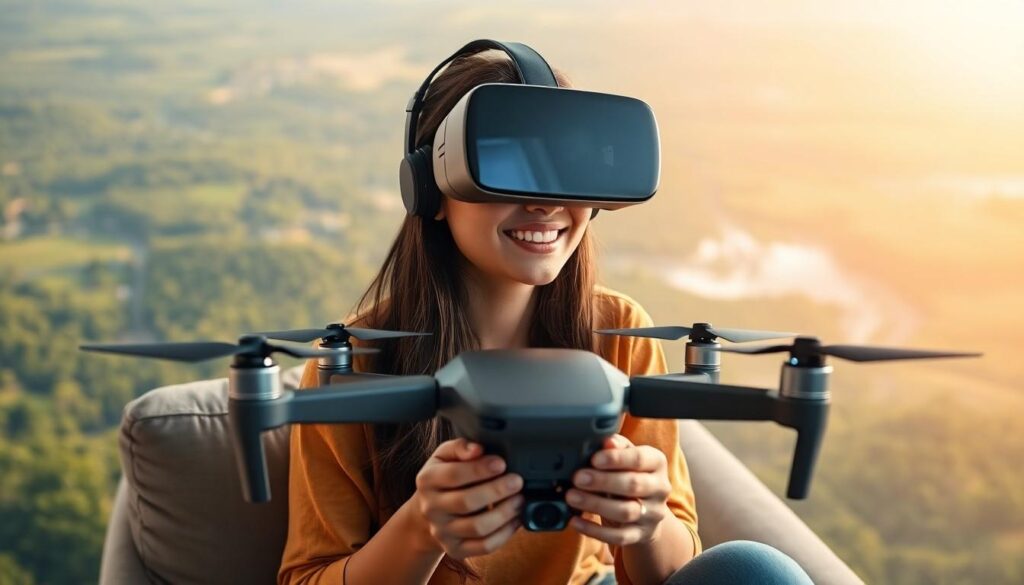
Imagine soaring through the skies without leaving your couch. With VR drones, that dream is now a reality. These high-tech gadgets blend the thrill of flying with the immersive experience of virtual reality, letting users pilot drones like never before. It’s like being a superhero—minus the spandex.
Overview of VR Drones
VR drones represent a breakthrough in drone technology, merging real-time camera feeds with virtual reality experiences. Users control these drones using VR headsets, providing an immersive environment that enhances the flying experience. With a VR headset, the user feels as if they are physically present in the drone, experiencing sensations and visuals akin to being in the cockpit.
High-definition cameras attached to VR drones capture stunning aerial footage, allowing users to explore landscapes from unique perspectives. These devices incorporate advanced sensors and GPS systems for stable flight and precise navigation. Enthusiasts benefit from features like automated flight paths and obstacle avoidance, making flying more accessible for beginners.
Designs of VR drones often prioritize user-friendly interfaces, enabling effortless operation through intuitive controls. Safety measures, such as emergency landing protocols and real-time telemetry, offer additional peace of mind. Many models also support streaming capabilities, allowing users to share their experiences live with others.
Applications of VR drones extend beyond recreation; industries utilize them for aerial surveying, agriculture, and search and rescue missions. Educational institutions integrate VR drone technology into their curriculums, fostering interest in STEM fields. As these devices continue to evolve, innovations like improved battery life and enhanced graphics will expand their functionality further.
The fascinating interplay of technology and adventure makes VR drones an appealing option for those seeking thrilling new experiences.
Benefits of Using VR Drones

VR drones provide users with unique advantages that enhance both recreational and professional applications. These devices revolutionize the way people interact with aerial technologies, making their benefits noticeable across various fields.
Enhanced Perspective
Users gain a bird’s-eye view through high-definition cameras integrated into VR drones. This perspective allows them to experience landscapes and environments unlike any other. Capturing astonishing aerial footage, these drones offer unparalleled visual encounters for photography and videography enthusiasts. Users also navigate challenging terrains with ease, all while immersed in a virtual experience. Multiple perspectives help in various sectors such as real estate, marketing, and tourism, where capturing stunning views can make a significant impact.
Improved Training and Simulation
VR drones serve as excellent tools for training purposes, particularly in advanced flight preparation. Aspiring drone pilots can practice in a safe, controlled environment, minimizing risks associated with real-life flying. Simulations help develop essential skills such as navigation and emergency response, crucial for successful piloting. Many industries benefit from this training ability, including public safety and military applications. Users can enhance their understanding of drone operations before flying actual devices, making this technology key in skill development.
Popular VR Drones on the Market
Several notable VR drones cater to enthusiasts and professionals alike. These drones stand out due to their advanced technologies and user-friendly features.
Specifications and Features
VR drones often include high-definition cameras, which capture stunning video and photos. Many models feature a stable flight system using advanced sensors and GPS technology. Real-time telemetry provides crucial flight information, enhancing the user experience. Head tracking capability in some drones allows for seamless navigation, making users feel as if they’re flying. Others integrate live streaming functions, enabling users to share views instantly. Battery life typically ranges from 20 to 30 minutes, offering ample time for exploration.
Price Range and Affordability
Budget-friendly options for VR drones start around $300, appealing to newcomers. Mid-range drones priced between $600 and $1,200 offer advanced features and better camera quality. High-end models may reach up to $2,500, delivering superior performance and durability for professionals. Users often find that investing in a reliable VR drone pays off, especially in industries like real estate and filmmaking. Many brands also provide warranty options and customer support, adding value to the purchase decision. Affordability varies, but numerous options cater to different needs and expertise levels.
Applications of VR Drones
VR drones find diverse applications across various sectors. The innovative nature of this technology creates unique opportunities for users.
Commercial Use Cases
Aerial surveying benefits significantly from VR drones. They’re utilized in industries such as construction and mining to gather precise data, enhancing project planning and execution. Agriculture also relies on these drones for crop monitoring, allowing farmers to identify areas needing attention quickly. Search and rescue missions gain efficiency with VR drones, as real-time visuals help locate missing persons. Many businesses leverage VR drones for marketing campaigns, capturing breathtaking aerial footage that showcases properties or events effectively. The ability to live stream enhances customer engagement, making these drones a valuable tool in multiple commercial applications.
Recreational Use Cases
Many enthusiasts use VR drones for recreational flying, enjoying an immersive piloting experience. Hobbyists appreciate the stunning aerial views captured by high-definition cameras, which enhance their outdoor explorations. Online communities often form around shared experiences and adventures, promoting a sense of camaraderie among users. Parents find value in using VR drones for educational purposes, introducing children to technology and engineering concepts in an engaging manner. Gaming elements in VR drone experiences attract a younger audience, further expanding interest in this innovative technology. Overall, recreational applications of VR drones provide endless opportunities for fun and learning.
Future Trends in VR Drones
Emerging technologies shape the future of VR drones, leading to more sophisticated capabilities. Enhanced battery life promises longer flight durations, allowing users to explore vast landscapes without interruption. Developers focus on improving graphical fidelity, which elevates the immersive experience for drone operators.
Artificial intelligence integration stands out as a key trend, making VR drones smarter and more autonomous. These drones can analyze environments in real time, offering users intuitive navigation assistance. Data collection improvements will also advance machine learning applications, resulting in more efficient operations across various sectors.
Safety enhancements continue to evolve, ensuring that users enjoy secure flying experiences. Advanced obstacle avoidance systems will likely become standard features, minimizing collision risks and promoting safe exploration. Real-time health monitoring for drones can alert users to potential issues before they escalate, increasing reliability.
Collaboration between industries amplifies the impact of VR drones. The film and gaming sectors are already leveraging these technologies for innovative storytelling and enhanced user engagement. Meanwhile, educational institutions emphasize collaborative projects, further integrating VR drones into STEM education.
Market demand influences design innovations, pushing manufacturers toward customizable options that cater to different user preferences. Modular components can enhance personalization while boosting functionality for various applications, from recreational flying to professional surveying.
User communities burgeon around VR drone technology, fostering shared knowledge and collaborative problem-solving. These forums and social platforms enhance users’ learning experiences, driving interest in the latest advancements. The future sees VR drones at the forefront of technological development, redefining possibilities across both recreational and professional landscapes.
VR drones are transforming the way users experience flight and explore the world from above. Their unique blend of immersive technology and practical applications makes them an exciting addition to both recreational and professional spheres. As advancements continue to emerge, these drones promise to enhance user experiences while expanding their capabilities across various industries.
The potential for VR drones to engage users in innovative ways while offering valuable insights in fields like agriculture, real estate, and education is immense. With a growing community of enthusiasts and professionals alike, the future of VR drones is set to soar, making them a key player in the evolution of drone technology.